
Table of Contents
Walk through any office storage room or warehouse, and you'll likely find the same thing: rows of unused chairs, stacked desks, forgotten filing cabinets, and idle workstations that haven't been touched since the last office reshuffle or post-pandemic downsizing.
For most businesses, this excess inventory represents a sunk cost; money already spent, value slowly depreciating, space being wasted. But a growing number of forward-thinking businesses are flipping this narrative entirely. Instead of letting surplus office furniture sit idle, they're turning it into a consistent, passive revenue stream through the booming furniture rental market.
Platforms like Vault.furniture are making this easier than ever - connecting businesses that have excess furniture with individuals and companies that need it, without the complexity of traditional resale.
Let's explore exactly how this works, why the timing has never been better, and how you can start monetizing your surplus office inventory today.
Hidden Cost of Excess Office Inventory

Before we talk about the opportunity, let's acknowledge the problem. Excess office furniture isn't just a storage inconvenience - it's an active financial drain on your business.
Consider the real costs of idle office inventory:
- Storage space costs money - Whether it's a dedicated warehouse, a rented storage unit, or premium office square footage being used as a junk room, idle furniture has a real estate cost
- Depreciation is relentless - Office furniture loses value every year it sits unused
- Disposal is expensive - Professionally disposing of large office furniture can cost hundreds to thousands of dollars
- Environmental impact - Sending usable furniture to a landfill is increasingly at odds with corporate sustainability commitments
The question isn't whether your excess inventory is costing you money. It already is. The real question is: why aren't you making money from it instead?
Why Office Furniture Rentals Are Booming Right Now
The furniture rental market is experiencing a significant surge, driven by several powerful trends that show no signs of slowing down:
Rise of Hybrid and Flexible Workspaces
The post-pandemic workplace transformation has created massive demand for flexible office furniture solutions. Businesses no longer want to commit to purchasing full office setups when their team size fluctuates month to month. Startups, remote-first companies, and co-working spaces increasingly prefer renting over buying — and they need quality, professional-grade furniture to do it.
Growth of the Circular Economy
Sustainability is no longer just a buzzword - it's a business imperative. Companies are actively seeking ways to reduce waste and embrace circular economy principles. Renting furniture instead of manufacturing new pieces is a powerful sustainability story, and businesses that participate in this model gain both environmental and reputational benefits.
Event and Pop-Up Economy
Corporate events, product launches, trade shows, temporary offices, and pop-up retail spaces all require furniture for short periods. These customers need quality pieces fast, for a defined time period, and they're willing to pay premium rental rates for the convenience.
Short-Term Office Setups for Remote Workers
With more professionals working from home or in temporary office arrangements, there's a growing demand for short-term office furniture rentals for home offices - a trend that platforms like Vault.furniture is perfectly positioned to serve.
How Vault.Furniture Makes Passive Income from Office Furniture Possible
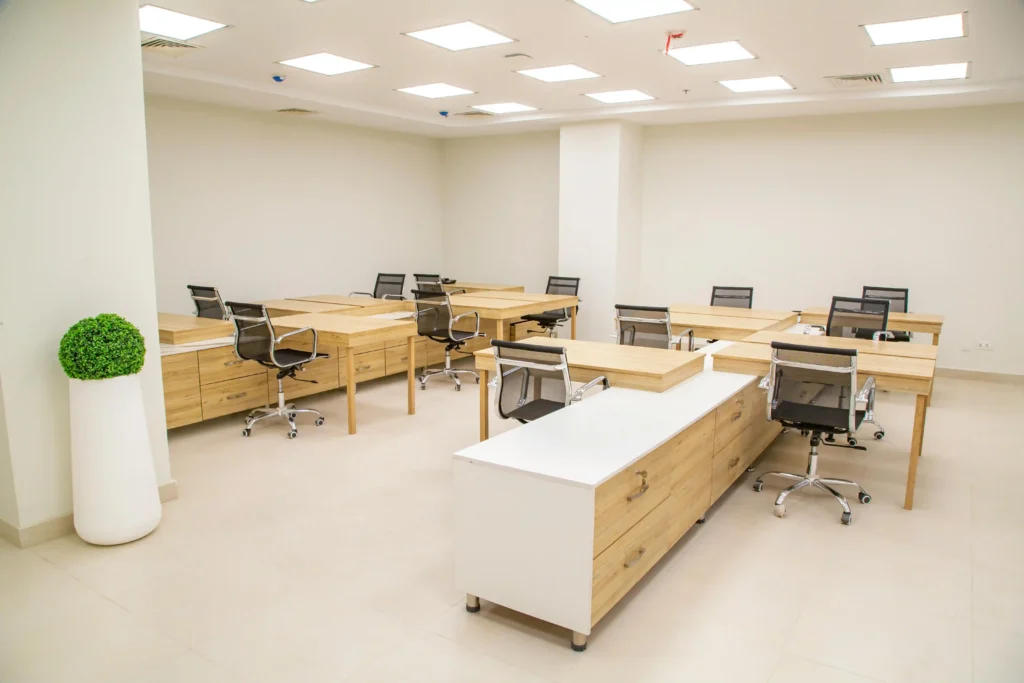
Vault.furniture operates as a dedicated furniture rental marketplace, connecting furniture owners (individuals, businesses, and landlords) with renters who need quality pieces for short or long-term periods.
For businesses with excess office inventory, this creates a straightforward passive income opportunity:
List Your Assets, Not Just Your Products
Unlike traditional resale platforms, where you sell a piece and it's gone, Vault.furniture's rental model means your assets keep working for you. A quality ergonomic office chair listed for rent can generate income month after month, year after year — while remaining your property.
Target High-Value Rental Categories
Certain types of office furniture command strong rental rates in the current market:
- Ergonomic office chairs: High demand from remote workers and temporary office setups seeking premium seating without the purchase price
- Standing desks and height-adjustable workstations: A top trending item as workplace wellness becomes a priority
- Conference room furniture: Tables and chairs for temporary meeting spaces, event setups, and co-working environments
- Storage and filing solutions: Needed by businesses in transition, office moves, or temporary setups
- Lounge and breakout furniture: Increasingly sought after for event spaces, pop-up offices, and hospitality setups
Build Long-Term Rental Relationships
Unlike one-time sales, furniture rentals often turn into long-term relationships. A startup that rents ten desks and chairs while they find their footing may become a recurring customer for years. This compounding rental income is the foundation of true passive revenue from office furniture.
Step-by-Step Guide to Monetizing Your Excess Office Inventory

Step 1: Conduct a Furniture Audit
Walk through your storage areas and document every piece of unused furniture. Photograph each item, note its condition, and research its approximate market value. Be honest about condition — rental customers expect quality.
Step 2: Clean, Repair, and Certify
Before listing anything for rent, ensure every piece is clean, functional, and presentable. Minor repairs — a tightened bolt, a replaced caster wheel, a professional clean — can dramatically increase the rental value of a piece.
Step 3: List on Vault.Furniture
Create your seller profile on Vault.furniture and list your inventory. Use high-quality photographs, detailed descriptions, and accurate dimensions. Highlight features that matter to renters: ergonomic certifications, weight capacity, brand names, and adjustability.
Strong listing keywords to include:
- Ergonomic office chair rental
- Standing desk rental for home office
- Corporate office furniture rental
- Short-term office furniture hire
- Sustainable office furniture rental
Step 4: Set Competitive Rental Pricing
Research comparable listings to set competitive rates. Consider offering flexible rental periods — daily, weekly, monthly, and long-term - to capture different customer segments. Long-term rentals provide steady, predictable income; short-term rentals command higher daily rates.
Step 5: Define Your Logistics Model
Decide whether you'll offer delivery and pickup services or require customer collection. For businesses with a vehicle or small logistics capability, offering white-glove delivery dramatically increases your appeal to corporate rental customers who are willing to pay a premium for convenience.
Step 6: Scale Your Rental Portfolio
As rental income begins flowing in, reinvest strategically. Consider acquiring additional high-quality second-hand office furniture at low cost, specifically to list for rent, transforming a passive-income side strategy into a full furniture-rental business model.
Numbers: What Can You Actually Earn?
To make this tangible, consider a realistic scenario based on commonly available office furniture in the current rental market:
| Item | Purchase/Acquisition Cost | Monthly Rental Rate | Break-Even Point |
| Ergonomic Office Chair | ₹15,000 | ₹1,500/month | 10 months |
| Height-Adjustable Desk | ₹25,000 | ₹2,500/month | 10 months |
| 8-Seater Conference Table | ₹40,000 | ₹5,000/month | 8 months |
| Filing Cabinet Set | ₹8,000 | ₹800/month | 10 months |
Once the break-even point is reached, every subsequent rental payment is pure profit — while the asset remains yours and continues generating income indefinitely.
Important Disclaimer: The figures presented in the table above are rough estimates intended purely for illustrative purposes. Actual acquisition costs, achievable rental rates, and break-even timelines may vary significantly depending on several factors, including but not limited to - the brand, age, and condition of the furniture, the duration and terms of the rental tenure (daily, weekly, monthly, or long-term), geographical location and local market demand, platform commission structures, maintenance and logistics costs, and the specific type and category of office furniture being listed. We strongly recommend conducting your own market research and consulting our advisor before making any investment decisions based on rental income projections.
Final Thoughts: Your Office Inventory Is an Untapped Asset
The shift from ownership to access is reshaping every industry — and office furniture is no exception. Businesses that recognize their excess inventory as a rentable asset rather than a liability are quietly building passive income streams that require minimal ongoing effort.
Platforms like Vault.Furniture has removed the traditional barriers to entering the furniture rental market — no need to build your own platform, manage payments, or find customers from scratch. The marketplace infrastructure is already there.
Your excess office furniture is not a problem to be solved - it's a revenue opportunity waiting to be unlocked.
Start listing your office furniture today at Vault.furniture and transform your idle inventory into a consistent, scalable passive income stream.
FAQs
How can I make passive income from excess office inventory?
You can earn passive income from excess office inventory by renting it directly to startups and remote workers via peer-to-peer marketplaces. Alternatively, you can partner with staging companies or asset-sharing platforms that manage the storage and leasing logistics for a share of the revenue.
What is the best platform to rent out excess office inventory online?
Vault.furniture is the best platform to rent out excess office inventory online.
How much money can I make renting out office furniture?
It significantly depends on several factors, such as the brand, age, and condition of the furniture, the duration and terms of the rental tenure (daily, weekly, monthly, or long-term), geographical location and local market demand, platform commission structures, maintenance and logistics costs, and the specific type and category of office furniture being listed.
What types of office furniture are most in demand for short-term rentals?
For short-term rentals, the most in-demand office furniture focuses on flexibility, employee wellness, and the needs of hybrid or temporary workspaces, such as ergonomic seating, height-adjustable & sit-stand desks, modular & reconfigurable workstations, acoustic privacy pods & focus booths, and flexible lounge & collaboration furnishings.
Leave a Reply